pjkhan23@gmail.com - GST NO. : 09AMPPJ0457M1ZI
- Send Email

Engineering & Construction Survey Services
Leading of Bridge Survey Service, Building Survey Service, Canal Survey Service, Cross Section Survey Service, Highway Survey Service, Layout Designing Survey Service, Quantity Surveying Service and Road Survey Service from Lucknow.

Bridge Surveyor – Expert Surveying for Safe and Durable Bridges
A Bridge Surveyor is a specialized professional responsible for conducting surveys required for the planning, design, construction, and maintenance of bridges. Bridge surveyors ensure accurate measurement of terrain, riverbeds, valleys, and approach roads, providing the technical foundation for safe and durable bridge structures. Their role is vital in infrastructure projects where precision and compliance with engineering standards are critical.
Using modern instruments such as Total Station, DGPS, Auto Level, Drone Mapping, and GIS technology, bridge surveyors collect detailed data on ground levels, water flow, soil conditions, topography, and structural alignments. This information is used by engineers to prepare alignment drawings, contour maps, cross-sections, and 3D models for bridge design.
Key Responsibilities of a Bridge Surveyor:
- Site Feasibility Surveys: Assessing terrain and environmental conditions for bridge construction.
- Alignment & Layout Marking: Positioning foundations, piers, and abutments with high accuracy.
- Hydrographic Surveys: Measuring river depth, flow, and bed profiles for water-crossing bridges.
- Structural Monitoring: Checking settlement, deformation, or displacement in existing bridges.
- Maintenance & Safety Surveys: Supporting periodic inspections to extend bridge life.
Bridge surveyors work closely with civil engineers, architects, contractors, and government agencies to ensure projects meet technical, environmental, and safety standards. Their expertise is crucial for highways, railways, metro systems, flyovers, and pedestrian bridges.

Building Surveyor – Expert Inspection & Assessment for Safe Construction
A Building Surveyor specializes in the inspection, measurement, and assessment of buildings to ensure safety, compliance, and efficient use of space. They play a key role in onstruction, renovation, property evaluation, and legal documentation, providing expert advice to architects, engineers, developers, and property owners.
Their work includes building inspections, structural analysis, condition surveys, and design verification to ensure projects meet technical standards and government regulations Using modern tools like Total Station, Laser Scanners, Drones, and CAD/GIS software building surveyors prepare accurate plans, layouts, and reports** for planning and development.
Key Services of Building Surveyors:
- Pre-Construction Surveys: Measuring plots and preparing building layouts.
- Structural Condition Reports: Assessing safety and durability of existing buildings.
- Renovation & Redevelopment Surveys: Providing base data for modifications and upgrades.
- Compliance & Approval Support: Ensuring adherence to municipal and regulatory standards.
- As-Built Surveys: Recording final construction details for handover and records.
Building surveyors also assist in dispute resolution, property valuation, and risk assessment, reducing construction errors, preventing legal issues, and ensuring projects meet safety and quality parameters.
Canal Surveyor – Expert Planning & Surveying for Water Management
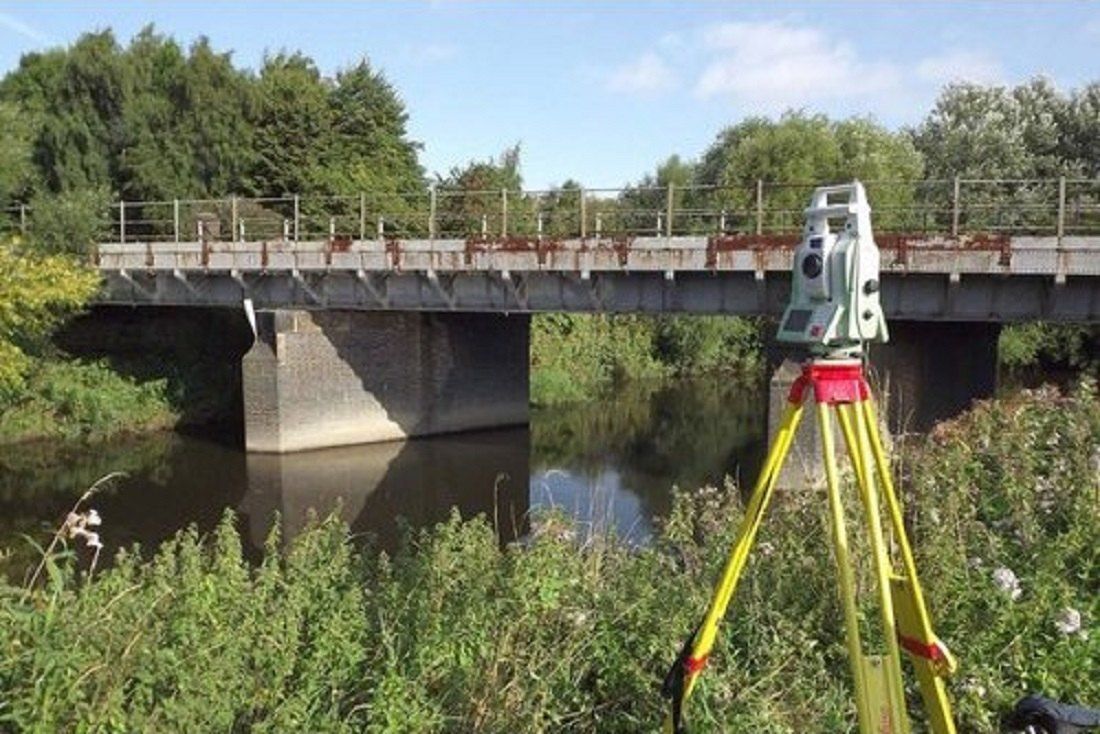
A Canal Surveyor is a specialized professional responsible for surveying, mapping, and planning canals for irrigation, drainage, navigation, and water management projects. Canal surveys are critical for ensuring proper water flow, alignment, and capacity, directly impacting agricultural productivity, flood control, and sustainable water distribution**.
Using advanced instruments such as Total Station, DGPS, Auto Level, Drones, and GIS Mapping tools, canal surveyors collect precise data on ground levels, cross-sections, longitudinal profiles, and surrounding topography**. This information helps engineers design canals that are structurally sound, cost-effective, and environmentally sustainable**.
Key Services of a Canal Surveyor:
- Alignment & Route Surveys: Determining the most efficient path for canal construction.
- Cross-Section & Longitudinal Surveys: Measuring slope and gradient for smooth water flow.
- Capacity & Volume Calculations: Estimating water storage and flow capacity.
- Canal Modernization Surveys: Assessing existing canals for widening, lining, or rehabilitation.
- Hydrological & Environmental Studies: Ensuring ecological balance and preventing soil erosion.
Canal surveyors work closely with government irrigation departments, construction companies, farmers’ cooperatives, and water resource engineers to ensure accurate planning and execution. Their surveys provide the technical foundation for new canal construction, repairs, and expansion projects.

Cross Sectional Survey – Accurate Terrain Profiling for Infrastructure Projects
A Cross Sectional Survey is a specialized type of land and engineering survey used to measure and represent the shape, elevation, and profile of the ground at regular intervals along a specific alignment. This survey is essential for infrastructure projects such as roads, railways, canals, pipelines, bridges, and drainage systems, as it provides accurate data on terrain variations and ground levels.
Using advanced instruments such as Total Station, GPS/DGPS, Auto Level, and Drone Technology, surveyors collect detailed information at fixed intervals along the alignment. This data is then used to create cross-sectional drawings** that represent the vertical profile of the land in relation to the project design.
Key Applications of Cross Sectional Surveys:
- Road & Highway Construction: Determining cut and fill quantities for earthwork.
- Canal & Drainage Projects: Calculating water flow capacity and ensuring proper gradient.
- Pipeline Installation: Mapping terrain variations for accurate alignment.
- Railway Projects: Designing stable and safe track beds.
- Structural Foundations: Assessing ground conditions for bridges, culverts, and embankments.

Highway Surveyor – Precision in Road Network Development
A highway surveyor plays a crucial role in the planning, designing, and construction of modern road networks. Highway surveying involves the precise measurement and mapping of land to determine the most suitable routes for highways, expressways, and road infrastructure projects. Using advanced instruments such as Total Stations, GPS/DGPS, Auto Levels, and drones, highway surveyors ensure accuracy in alignment, gradients, curves, and elevations—vital for smooth and safe road construction.
The survey process begins with reconnaissance and feasibility studies, where surveyors evaluate terrain, soil conditions, and existing obstacles. Detailed topographic and alignment surveys are then conducted to prepare contour maps, cross-sections, and longitudinal profiles. These surveys help engineers and planners design cost-effective and sustainable highways while minimizing environmental and social impacts.
Skilled highway surveyors also provide construction layout services, ensuring that designed plans are executed correctly on-site. They mark centerlines, levels, and boundaries required for excavation, embankments, pavement layers, bridges, culverts, and other road features. Their expertise supports seamless coordination between engineers, contractors, and government authorities.
Highway surveyors are also essential for road widening projects, bypass construction, hill road development, and maintenance surveys. By leveraging modern surveying technologies, they help reduce errors, save time, and enhance efficiency in highway development.

Layout Designing Survey – Accurate Planning for Residential, Commercial & Industrial Projects
A Layout Designing Survey is an essential step in the planning and development of residential, commercial, and industrial projects. It involves the precise measurement, division, and mapping of land into plots or sections according to approved design plans and legal regulations. This survey ensures accurate demarcation of boundaries, road alignments, open spaces, utility areas, and amenities, creating a clear and reliable blueprint for property developers, real estate companies, and landowners.
Using advanced instruments such as Total Stations, GPS/DGPS, Auto Levels, and Drone Technology, layout designing surveyors provide accurate data for drafting layouts that comply with local authority guidelines such as LDA (Lucknow Development Authority) approvals, RERA norms, and municipal standards. Proper layout planning not only enhances the functionality and aesthetics of a project but also ensures that land utilization is efficient, legally compliant, and future-ready.
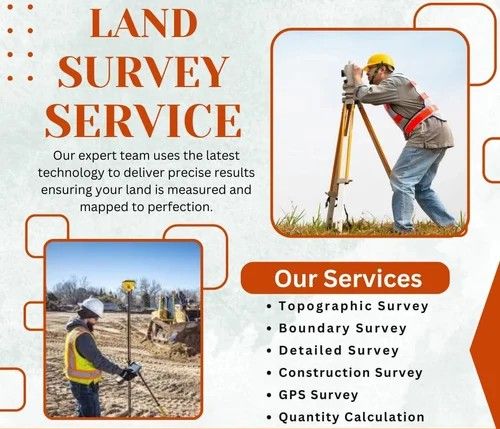
Quantity Surveying by TS" most likely refers to using a Total Station (TS), DGPS AND DRONE a modern surveying instrument, for quantity surveying tasks, which involves using the TS for site surveys to gather data like distances and angles to estimate and cost construction materials and labor. This method uses the TS's ability to measure and record coordinates and distances, which are then downloaded and processed on a computer for accurate measurements and map production.
Road Surveyor – Precision Surveys for Road & Highway Projects
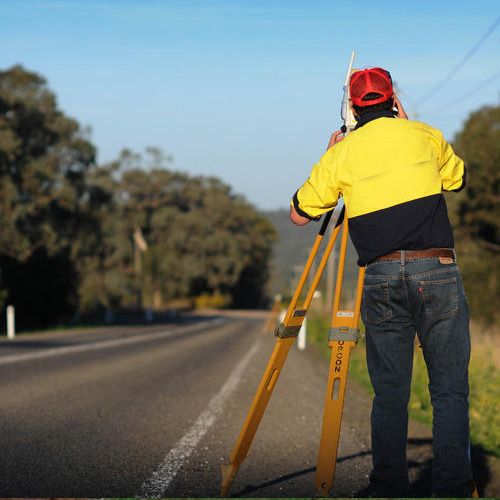
A Road Surveyor plays a key role in the planning, design, and construction of roads, highways, and expressways. Their primary responsibility is to conduct detailed surveys that provide accurate data on land levels, alignment, gradients, and terrain conditions, which is crucial for engineers and planners to design cost-effective, safe, and durable road networks.
Using advanced instruments such as Total Stations, GPS/DGPS, Auto Levels, Drones, and GIS Mapping, road surveyors collect precise measurements of the land. These surveys include topographic mapping, contour studies, cross-section, and longitudinal profiles, vital for road alignment and construction planning.
Key Tasks of a Road Surveyor:
- Route Alignment Surveys: Identifying the most suitable path for roads or highways.
- Topographic & Contour Mapping: Recording terrain elevations for accurate design.
- Earthwork & Volume Calculations: Estimating cut and fill quantities for construction.
- Construction Layout: Marking center lines, curves, slopes, and levels on-site.
- Quality & Compliance Checks: Ensuring road projects follow engineering and government standards.
Road surveyors work closely with civil engineers, contractors, and government authorities to deliver reliable data that supports both new road construction and maintenance projects, reducing errors, minimizing costs, and ensuring long-lasting infrastructure.
